
Here is something to know before your next family Christmas. The person sitting across from you – the one you've shared a childhood with, a surname with, possibly a nose with – might be genetically less related to you than a complete stranger is to their own half-sibling. Not metaphorically. Literally, in the actual chemistry of it.
Dealt More Like Poker
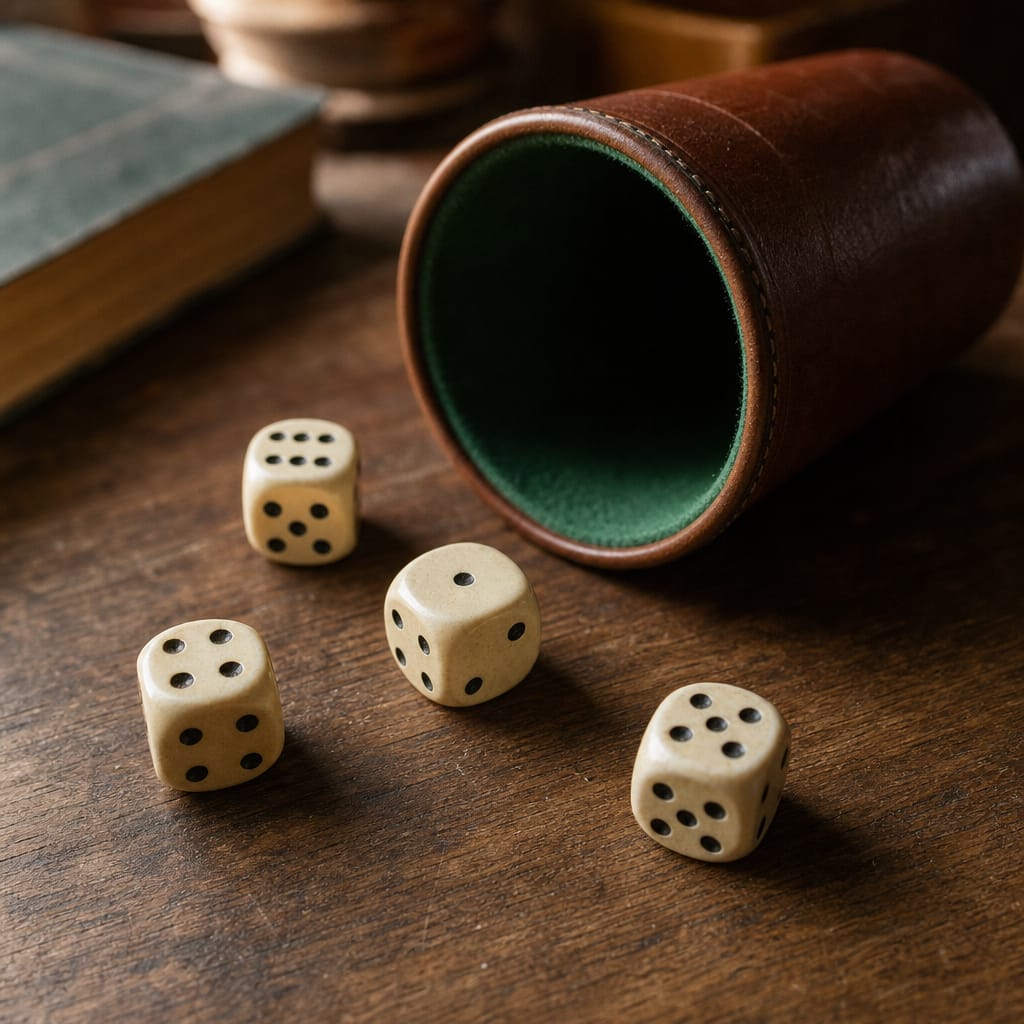
This happens because of the way DNA is dealt out, and it's more like poker than most people realise.

Why can siblings be so different?
When your parents made you, each of them didn't simply hand over half their genome in a neat, orderly split. What actually happened is a process called meiosis. The chromosomes shuffle themselves first – swapping chunks back and forth in a process called recombination – before the deck is cut and dealt. The result is that every egg and every sperm is a genuinely unique hand of cards. No two are the same, even from the same person.
How genetically similar are siblings really?
Which means that you and your full sibling, despite sharing both parents, might have ended up with surprisingly different hands. The expected overlap is around 50%, but that's just an average. In practice, the range for full siblings runs from roughly 37% to about 61%. So two brothers from the same mum and dad could, in principle, share less DNA than two half-siblings who happened to draw the same chunks from their shared parent. The family tree is the same. The genetic reality is messier.
What's strange is how little this registers in everyday life. You look at your brother and you see your brother. The resemblance feels obvious – the same laugh, the same slightly oversized ears – and you're not wrong, exactly. Those shared features are real. But they're a small selection of signal pulled from a much larger shuffle, and the rest of it is noise. The bits of your genomes that don't overlap? Those are doing something too. They're making you different people.
For a genuinely odd extension of this idea – that the genetic material you're carrying is stranger and more varied than you'd think from looking in a mirror – The Stranger Inside You is worth a read.
What It Means for Identity
The real kicker is what this means for identity. "Family resemblance" is something we notice and name and feel deeply. It gives us a sense of biological belonging, of being stamped from the same press. But here's the thing: the genetic architecture underneath that feeling is far wobblier than the feeling suggests. You belong to the same family in the social, legal, emotional, Sunday-lunch sense. Genetically, you're all just the results of a long series of recombination events that could easily have gone differently.
Your mum could have dealt a slightly different hand, and your dad too. The sibling you've known your whole life might, in another universe, have been measurably less your sibling than the one you'd never got. You got lucky with the shuffle. Or at least, you got a shuffle, and here you are.
Questions this raises
- What does shared DNA actually mean?
- Are half-siblings much less related?