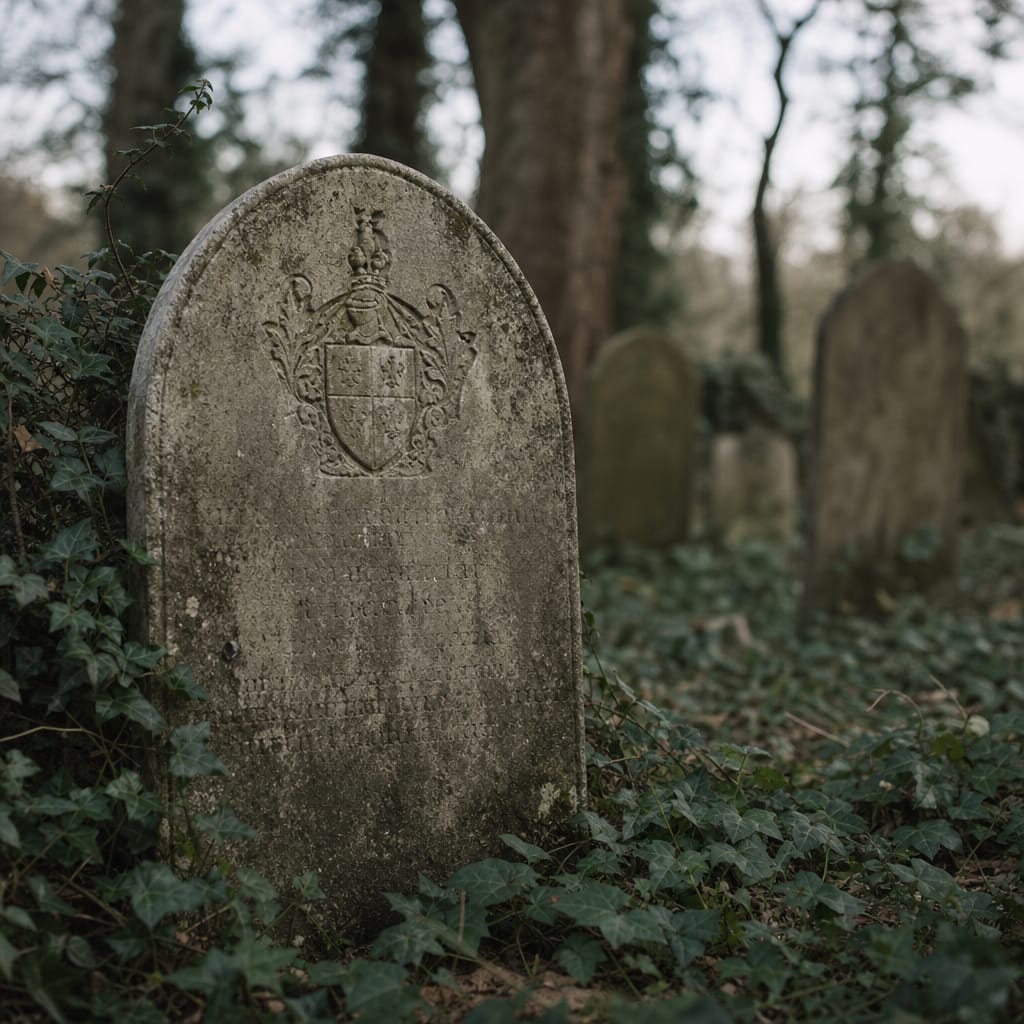

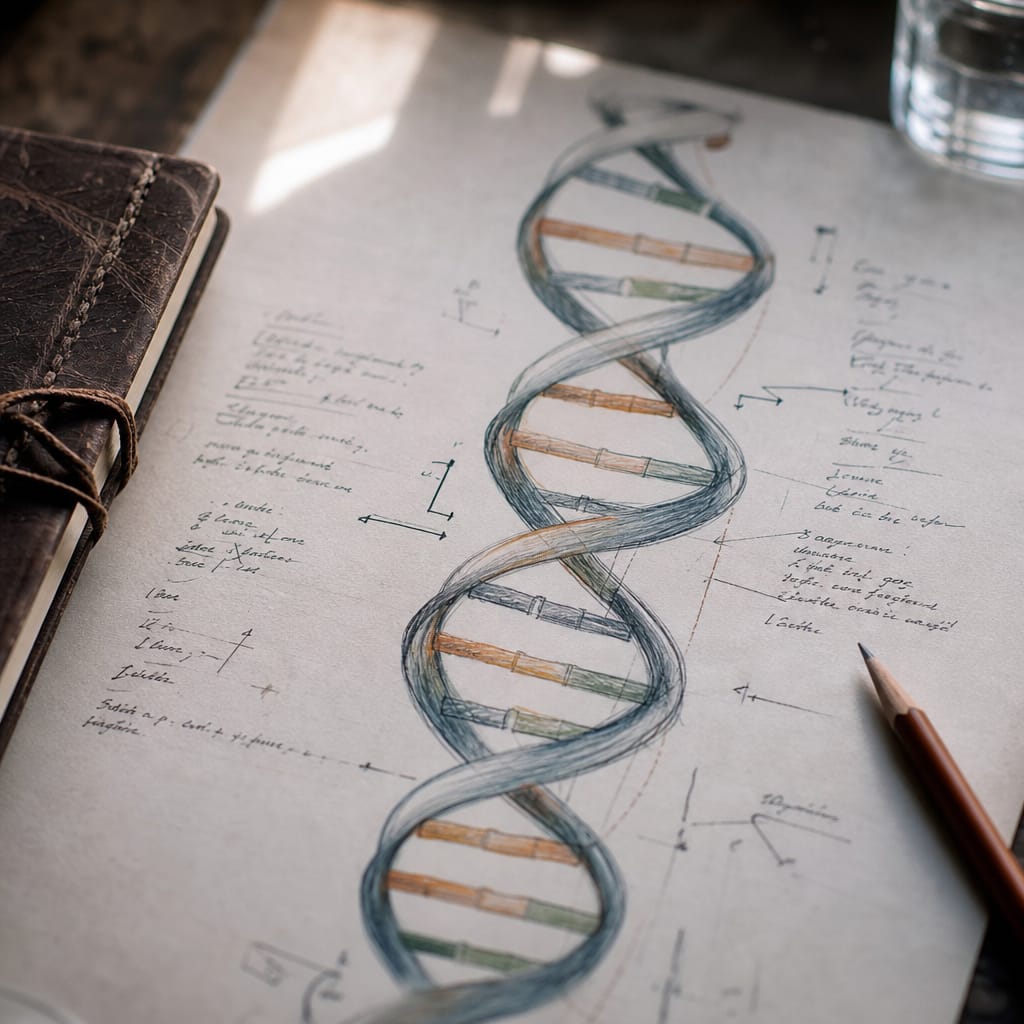
Picture a very old library book – one that's been borrowed so many times that the margins are absolutely crammed with other people's pencil marks. Tiny corrections, underlinings, the occasional furious question mark left by someone three owners ago. The text itself hasn't changed, but the way you read it is completely shaped by all those annotations.
That's more or less what epigenetics is. And once you've got that image in your head, it's hard to look at your own body quite the same way again.

What is epigenetics in plain terms?
Your DNA – the actual sequence of letters, the genetic text – is largely fixed. What is not fixed is whether particular genes get switched on or off, turned up or turned down. That switching is controlled by chemical marks that sit on or around the DNA without rewriting it. They're the pencil notes. And here's the bit that catches most people off guard: those marks can be inherited. The annotations your grandmother's body made in response to her life can still be sitting in the margins of yours.
Demonstrated Under Extreme Hardship
This has been demonstrated most vividly in populations that lived through extreme hardship. Children and grandchildren of people who survived famine have shown measurable differences in how their genes regulate metabolism and stress responses – even when those descendants grew up in perfectly comfortable circumstances. The famine itself ended. The chemical footnote it left behind did not.
The best-documented example is the Dutch Hunger Winter of 1944 to 1945, when a German blockade left the occupied western Netherlands on official rations that fell as low as 400 to 800 calories a day. Researchers who studied people exposed to the famine in the womb found that around six decades later they had less methylation on IGF2, a gene involved in growth, than their unexposed same-sex brothers and sisters. Other studies of the same group have linked prenatal famine to differences in health in later life.

Note also that there is an important distinction to be made between demonstrating that a mark laid down prenatally can last a lifetime, and demonstrating that such a mark is then passed on to the grandchildren of the original individual. In humans the evidence for such intergenerational transmission is much weaker and still debated. There is, however, some hopeful data on this topic: in animal studies, for example, warm, attentive early life experience has been linked to differences in methylation on genes that are involved in the organism’s stress response.
How Methylation Works
It works through a few different mechanisms. The most studied is methylation, which is essentially a small chemical flag that attaches to a gene and says "not now" (or sometimes, "always"). Stress hormones, nutritional deficiencies, toxic exposure: all of these can plant flags, and some of those flags, rather than being cleared between generations, get copied faithfully along with everything else.
What this means in practical terms is stranger than it sounds. Your grandfather's brutal winter, your great-grandmother's anxiety during the war, the famine two generations back in a country you've never visited – these aren't just stories. They may be biological instructions still running quietly in your cells, influencing your cortisol levels, your appetite regulation, your susceptibility to certain conditions. For more on how this inherited handwriting shows up in the family health picture, The Family Form Is Still Being Filled In.
Is epigenetics reversible?
The encouraging side – and there is one – is that the marks aren't permanent in the way that a DNA mutation is. More like pencil than ink. Diet, exercise, chronic stress, even sleep patterns all appear to influence which marks get added or removed during your own lifetime. You are, in other words, currently annotating the copy that gets passed on.
So the next time your GP slides that family history form across the desk – the one asking about grandparents' heart disease and whether anyone had diabetes – you're not just filling in a family tree. You're describing a manuscript that's been accumulating handwriting for generations, some of it in languages you can't quite read yet.
Questions this raises
- Can life experiences change gene expression?
- Are epigenetic changes inherited?