

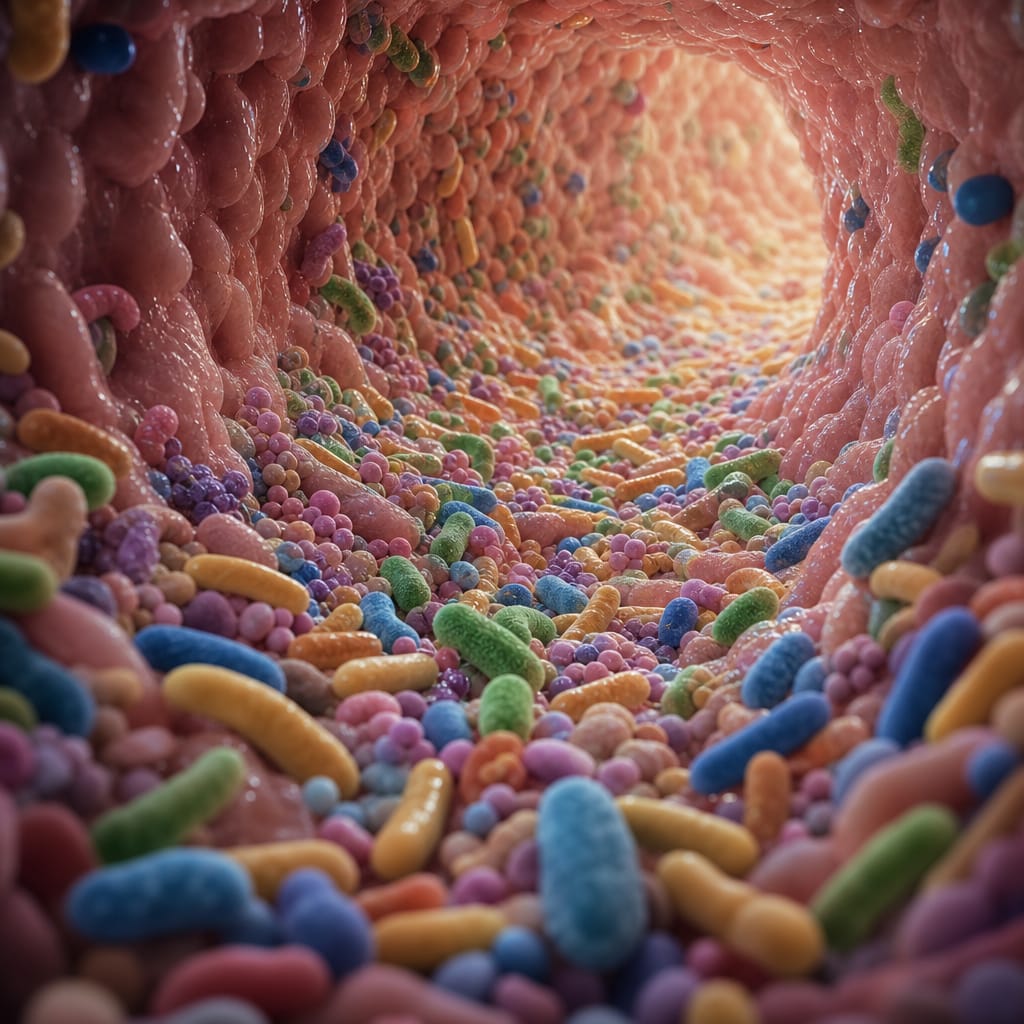
For most of human history, we assumed the gut was basically a long tube that processed food, absorbed what was useful, and got rid of the rest. Elegant in its simplicity. Deeply, embarrassingly wrong.
It Came Apart in the 2000s
The real story started to come apart in the early 2000s, when microbiologists began pointing DNA sequencing equipment at human stool samples – not exactly the glamorous end of science, but the results were extraordinary. What the sequencers found were genetic fingerprints of thousands of species of bacteria that nobody had ever seen before. Not because the researchers had been careless. Because those organisms cannot survive outside the gut. The moment they touch oxygen, they die. You can't grow them in a petri dish, can't study them under a microscope. For centuries, they were simply invisible, and we had no idea they were there.

Fewer Than a Third Have Been Named
By some current estimates, fewer than a third of the species living in your gut have even been given a name yet. Think about that for a moment. The majority of organisms inside your own body are still scientifically nameless. We know they exist because we can read fragments of their DNA, but we haven't formally described them, catalogued them, or worked out what most of them are doing in there.
The Deep-Sea Analogy
This is where the deep-sea analogy earns its keep. Oceanographers mapped the surface of the moon before they mapped the floor of the Pacific. The deep ocean is full of strange, pressure-adapted creatures doing strange, pressure-adapted things, and we've glimpsed only a fraction of it. Your gut is something like that: a vast, sealed, low-oxygen ecosystem that we are still – right now, in the 2020s – in the early stages of exploring. The scientists aren't finishing up. They're still drawing the coastlines.
What we do know is genuinely odd. The gut contains somewhere in the region of 38 trillion microbial cells. Your own human cells number roughly the same. So in a very literal sense you are about half you and about half something else – and "something else" is doing quite a lot of work. Some of those organisms produce vitamins your body relies on. Some are involved in training your immune system. There's solid evidence that early-life exposure to a diverse microbiome shapes how your immune response develops, which is part of why the so-called hygiene hypothesis (the idea that very sterile childhoods might leave immune systems underexercised) has attracted serious research attention. Some gut bacteria produce short-chain fatty acids that appear to affect the lining of the intestine, and some produce neurotransmitters – yes, the same chemicals your brain uses. The gut-brain axis, the idea that there's a genuine two-way conversation happening between your digestive system and your head, was considered fairly fringe not long ago. It is now one of the busier areas in medical research.
How you acquire your microbes
We don’t start off with a fully formed ecosystem. The first microbes to colonise a brand new baby are those that they get at birth – and the type of early colonies that a baby gets can depend on whether they have a vaginal delivery or a caesarean section, for a start. Then, the newborn gets more from milk, from skin contact, from the food that they are fed and from everything that they put in their mouth. It’s a rapidly changing community in the first two years of life or so and it starts to settle down to a more ‘adult’ community by the time that the child is a toddler. Those early colonisers are put to work straight away – some of the gut residents make vitamins for their host, including vitamin K and some of the B vitamins, and a lot of the body’s immune tissues reside in and around the walls of the gut and get to learn what to tolerate and what to attack.

Inside, it behaves less like a single organism and more like a crowded city, where many species compete for space and food. Some species even live on the by-products of other species. The main short-chain fatty acid produced by species in this ecosystem is butyrate. It is produced from fibre and is a nutrient for the colonocytes (the cells that line the colon). Diversity equals resilience because no single species can fulfil all the roles.
The gut's own nervous system
The enteric nervous system is two thin layers of nerve cells running from the oesophagus down to the rectum. It contains hundreds of millions of nerve cells controlling many functions including the muscular contractions of the digestive tract and the release of digestive enzymes. It also times each stage of digestion without waiting for instructions from your head. Under stress, digestion is one of the first functions to be put on hold by the body.

The term ‘second brain’ has been used in reference to the gut, though it runs digestion, not thoughts. The main nerve to connect the gut to the brain is the vagus nerve. Around 80 to 90 per cent of its fibres carry information from the gut to the brain and not messages from the brain to the gut. The gut is also the site of production of about 90 per cent of the body’s serotonin. The effects of this serotonin are mostly confined to the gut itself and do not cross into the brain. This is partly why the phrase ‘gut feeling’ is more literal than it sounds, and researchers think signals travelling up the vagus nerve may influence appetite and cravings.
Soil, antibiotics and what you eat
Most surprising of all, perhaps, is research outside the body of an individual. For example, a teaspoon of healthy soil can harbour more microbes than there are people on Earth. Moreover, the amount of time an individual spends outside compared to time spent inside can expose him or her to a vastly greater number of outside microbes. In 2007, for example, researchers at the University of Bristol reported that they gave mice a harmless soil bacterium, Mycobacterium vaccae, and found that the serotonin-producing neurons in the mice began to show activity. The behaviour of the mice also changed in ways that were comparable to the effects of antidepressants. Again, this is an animal study and it would be silly to conclude that a walk in the woods would treat depression. But the study does demonstrate the close relationship that seems to exist between an individual’s immunity, the outside microbes that he or she is exposed to, and his or her mood.

Antibiotics are blunt tools that affect the whole community of microbes. A broad-spectrum antibiotic can clear many helpful species as well as the pathogen that caused the infection, and less useful species can then fill the vacant niches, and recovery can take weeks or even months. But that is no reason to refuse antibiotics when they are really needed. Fermented foods like kefir and sauerkraut are fine as an addition to a varied diet, but as yet we do not know how many of their microbes will become resident. However, none of this requires buying anything; it comes down to eating more fibre and a wide variety of plant foods and taking fewer unnecessary courses of antibiotics. That is the main message of the evidence.
Nobody Can Define Healthy Yet
What nobody can tell you with any confidence yet is exactly what a "healthy" microbiome looks like. The diversity-is-good idea is popular, and there's real data behind it, but the field is young enough that bold claims should be treated sceptically. The probiotic industry would very much like you to believe that drinking a small yoghurt drink every morning is meaningfully shifting this ancient, complex ecosystem. Maybe it helps a bit. The honest answer is we don't know – partly because different people's microbiomes are startlingly different from one another, shaped by where you were born, how you were fed as an infant, every antibiotic course you've ever taken, what you eat, where you live. Two healthy people can have almost no species in common.
Which means the really interesting discovery isn't any particular microbe doing any particular job. It's the realisation that the inside of your body is still, in a genuine scientific sense, a frontier. The tools to see it properly have existed for barely twenty years. The map is mostly blank. And the creatures already living there – in their trillions, doing their quiet, unknown work – got there long before any scientist thought to look.
Questions this raises
- What does the gut actually do beyond digestion?
- How does gut bacteria affect mood?
- What is the gut-brain axis?
- Can probiotics change how you feel?