

Francis Galton was a Victorian statistician who measured practically everything he could reach. In the 1870s he noticed something peculiar about the English aristocracy: their surnames kept vanishing – not the families, who were perfectly healthy, thank you very much, but the names themselves. Lines of earls and baronets with sons and grandsons nonetheless found the family name simply running out. Galton thought it was a statistical curiosity worth investigating – he was right, but the answer was stranger than he expected.
A mathematician called H.W. Watson solved it properly, and the result has been unsettling probabilists ever since. In a population where each couple produces exactly two children on average – perfectly stable, no decline – the probability that any given surname survives forever is not "quite low". It is precisely zero. Not likely to end. Certain to.
The Branching Problem
The reason is variance. "Two children on average" is not "two children every time". Some couples have three, some have one, some have none. Each generation is a fresh roll of dice, and all you need for a name to die is one generation where every male line fails to produce a son. Mathematicians call this a branching process. Each bearer produces a random number of bearers in the next generation, and in a stable population, the whole tree eventually hits zero. Every time.
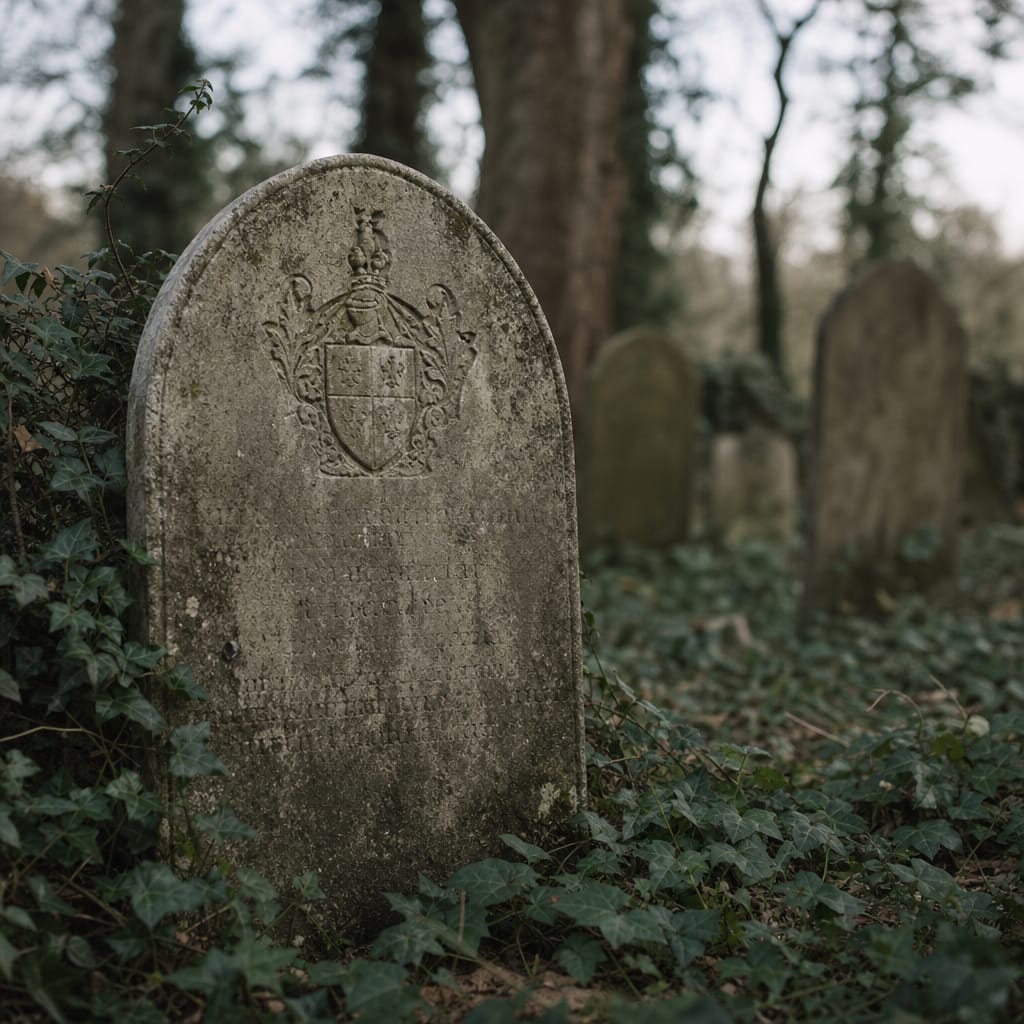
Growing populations change the odds – in an expanding population the extinction probability drops below one – but even then, most names still die out. The ones that survive are simply the branches that got lucky enough to avoid that zero-generation for long enough. Hundreds of years of consecutive luck.
Not Champions. Winners of a Random Draw.
This reframes every old surname completely. The Smiths and the Joneses and the Taylors are not the names of especially vigorous lineages, carefully maintained by sensible people making sensible decisions. They are lottery winners of a branching process that has been running for centuries. The names that vanished – vastly more of them – were not weaker or less careful; they were the overwhelming statistical majority, doing exactly what the maths said they would.
For a longer read on how definitions of family keep shifting over time, The Family Form Is Still Being Filled In is worth your time.
Galton's original puzzle was why aristocratic names kept disappearing while the aristocracy itself was fine, and the answer turns out to be the same for everyone: names die because that is what names do. The thing that needs explaining is never that one ended. It's that one hasn't.
—
So if extinction is certain, why are there still thousands of surnames?
Because the world's population has been growing for most of recorded history. In an expanding population, the extinction probability drops below one, so it's no longer guaranteed – but the majority outcome is still extinction, with only a minority of lines escaping. Every name still in use today is part of that minority, accumulated over centuries of lucky rolls.
Did Galton figure this out completely on his own?
No. He posed the problem in 1873 – framed specifically around aristocratic surnames – and Watson supplied the mathematics. Galton asked the question; Watson proved the result. The theory was made more formally rigorous by probabilists in the twentieth century, but the core finding came from that collaboration.
Does this mean my surname will definitely disappear eventually?
Almost certainly, yes – though "eventually" might mean a thousand years from now. Having more children than average, consistently across every generation, reduces the odds of hitting zero in any one generation. But across hundreds of generations, the cumulative pressure doesn't go away. Some future generation's roll of the dice will still be the last. The lottery is still running.