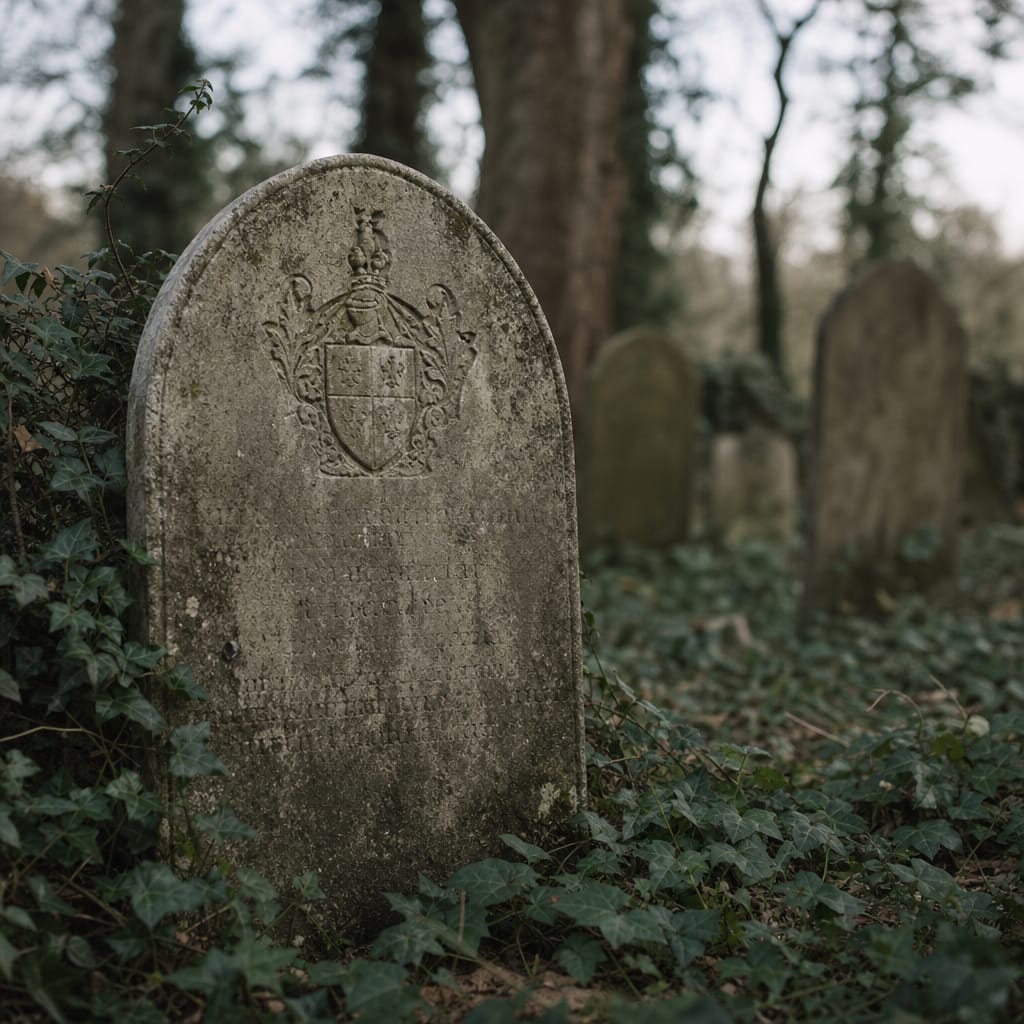


Somewhere around the 12th and 13th centuries, England's clerks and tax collectors ran into a problem. There were, depending on the village, roughly seventeen men called John. The old system of just calling someone "John" was becoming administratively catastrophic. Someone had to pay the tallage. Someone had to be recorded in the court roll. The clerks did what any overworked bureaucrat would do: they invented a second field.
That second field is your surname. And the remarkable thing is that they only had four ideas about what to put in it.

What your father was called
The easiest fix was to just say whose John you were. John, son of Will, becomes John Wilson. John, son of Rob, becomes John Robertson. Johnson, Richardson, Davies (from David), Jones (Welsh for John's son) – all of them just a clerk writing "this bloke's dad" in a column. If your surname ends in -son, or is recognisably a first name with a possessive quality to it, that is literally all it is. Patronymic column. Entry complete.
What do occupational surnames tell you?
If your father's name wasn't distinctive enough, the next obvious column was occupation. Smith is the most common surname in Britain, because there was a blacksmith in virtually every settlement and he was impossible to miss. Fletcher made arrows. Cooper made barrels. Turner worked a lathe. Thatcher did what you'd expect. These weren't nicknames given affectionately. They were a clerk's shorthand for "the one with the anvil". Over time the job description outlasted the job, got passed to sons who'd never touched a barrel in their lives, and here we still are.
Where you lived
For people who weren't distinctive by parentage or profession, geography did the work. If you lived by the woods, you might become John Wood, or John Atwood ("at the wood"), or John Forest. Hill, Brook, Moore, Shaw (an old word for a thicket), Green – these are all just map references, your ancestor filed under their postcode. This is almost exactly the same logic as how websites get ranked by what links to them and what surrounds them, a point that Your House Has a PageRank makes rather well. Sorting systems always end up reflecting the landscape they were built to sort.
What you looked like
The fourth and honestly least flattering column was physical description. Reid and Read come from the Old English for red-haired. Blake could mean either pale or dark, depending on the dialect. Short, Long, Small, Stout – all real surnames, all once someone's clerk just glancing up from the desk and writing down whatever they saw first.
Four columns. Father's name, occupation, location, appearance. The clerks filled them in once, the entries got copied into parish registers, the parish registers fed into census records, and somewhere in the 1850s the system essentially froze. Your surname isn't really yours. It's a data entry from about seven hundred years ago, made by a tired man with an ink pot, trying to tell one John from another.
Questions this raises
- Where do British surnames come from?
- Why did surnames appear in the 12th century?
- How do I trace the origin of my surname?