

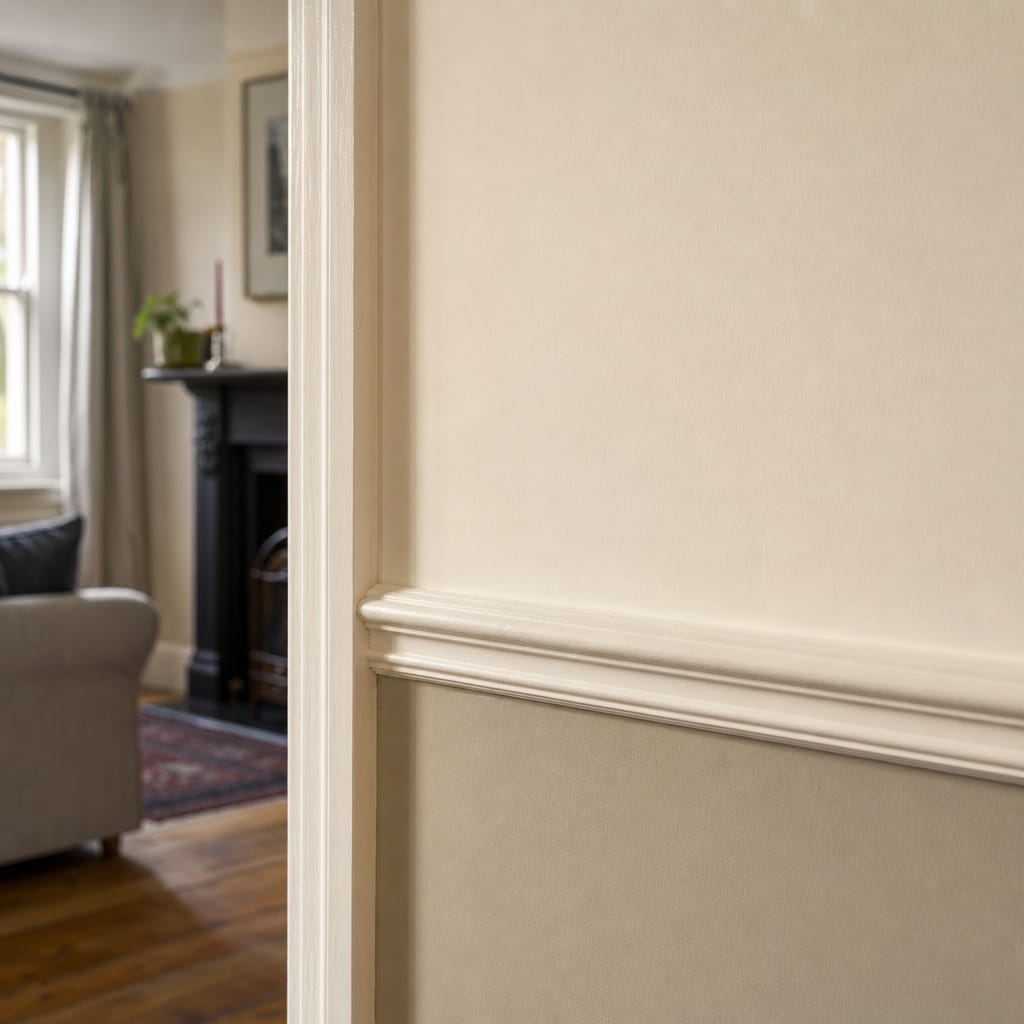
Somewhere in your hallway there is a decision someone else made. Maybe it's the shade of magnolia that the previous owners chose because it was safe, or the dado rail that some 1980s occupant was absolutely certain about, or the spot where a boiler was moved three inches to the left for a reason nobody alive can now explain. None of these things happened by accident. Each one was a vote. And votes, it turns out, stack up.
How a Page Earns Authority
Think about how a webpage earns authority on the internet. It's not just about what the page itself says – it's about every other page that has ever pointed to it. Every recommendation, every citation, every "have a look at this." Each link is an opinion, a tiny act of trust, and the more trust accumulates, the more weight the page carries. Every Link You've Ever Clicked Was Someone's Opinion – which is the kind of thought that sounds obvious until you sit with it for a moment and realise it isn't obvious at all.

Your house works exactly like this.
Why do previous owners’ choices persist in a house?
Every person who's ever lived in it has cast votes. The couple who extended the kitchen in 1997 voted, loudly and expensively, for Sunday roasts and big family Christmases. The single professional who converted the dining room into a home office voted for quiet evenings and a shorter commute. The landlord who fitted the magnolia voted for the kind of blankness that offends nobody and pleases nobody either. These votes didn't disappear when those people left. They're in the walls, the skirtings, the tiled-over fireplace, the slightly odd angle of the bathroom door. Every house is a palimpsest – layers of other people's preferences pressed down under your own.
Why do some dated features feel hard to remove?
And here's the interesting part: not all votes carry the same weight. A structural wall that someone knocked through in 1970 carries enormous authority. You can't just down-vote it out of existence. A paint colour someone chose last year? Low authority, easy to override. The hierarchy matters. Some decisions become load-bearing, literally or otherwise, and they shape everything that comes after them. A room with a north-facing window casts a kind of permanent vote for cool light and a slightly more muted colour palette, whether the current occupant knows it or not. The window was there before you arrived. It will be there after you leave.
What's strange is how rarely people think consciously about the votes they're casting while they're casting them. You drag a sofa in because you fell for it in the showroom, and fifteen years later it has completely restructured how you and everyone you live with moves through the room. Where people sit, where they don't, which corner ended up as the junk corner because the sofa blocked the natural route to the shelving unit. One decision made on a Saturday afternoon, still in effect a decade and a half later, still shaping behaviour. That is authority.
Authority Can Be Squandered
The analogy holds for how quickly authority can be squandered too. A house that's been loved – maintained, responded to, gently updated – earns what you might call a high PageRank. It has coherence. The decisions layer without contradicting each other too badly. A house that's been neglected, or subjected to a string of conflicting, undercooked choices (the wet room that doesn't drain properly, the underfloor heating fitted only in the kitchen), is full of broken links. Things point nowhere. The votes cancel each other out.
This is probably why walking into someone's home for the first time tells you so much about them without a word being exchanged. You're reading the accumulated votes, feeling the weight of all the small opinions pressed into the place. The shelf arrangement. The art. The things they couldn't be bothered to deal with, pushed to the edges of rooms where they've quietly become furniture. Every domestic choice is a link cast in a particular direction, and the home that results is the page that all those links have built.
It may or may not be ranking very well.
Questions this raises
- Should I strip a house back before decorating?
- How do I tell which features are original?