
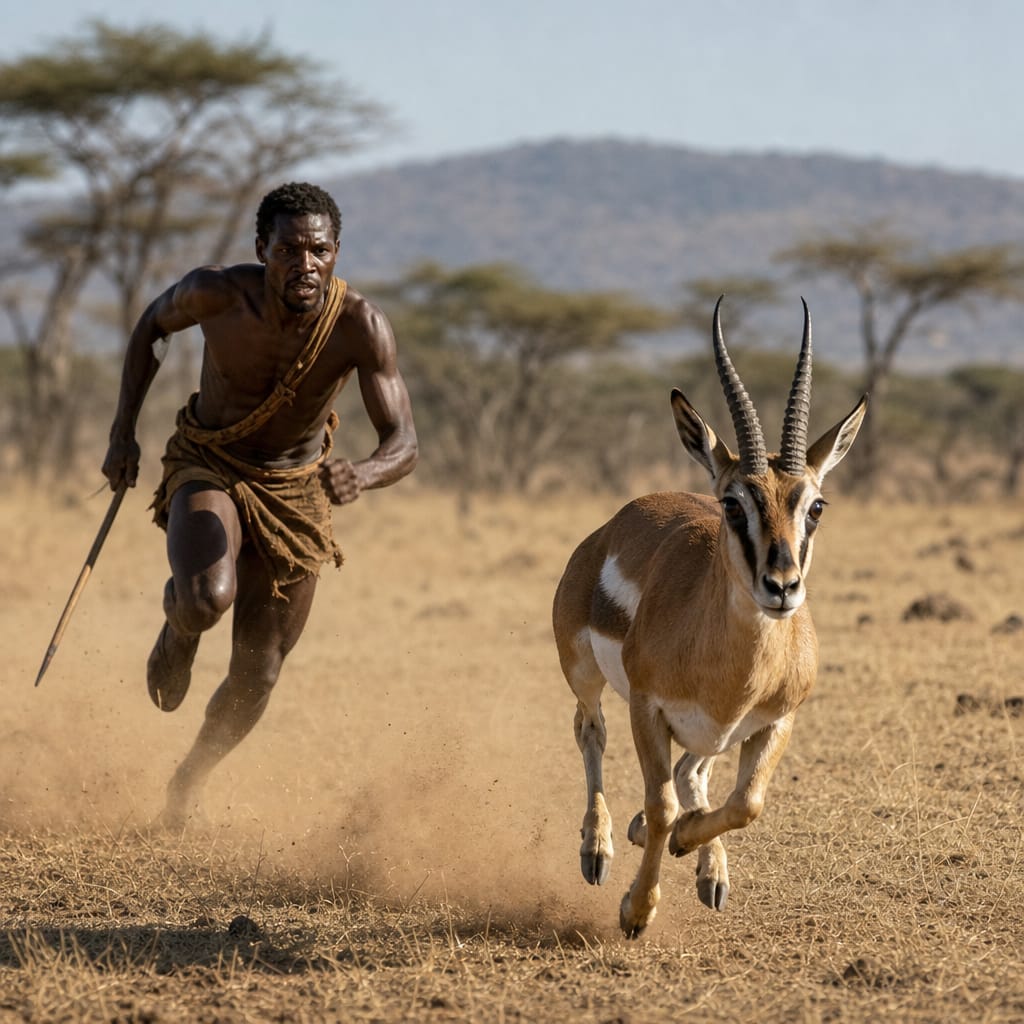
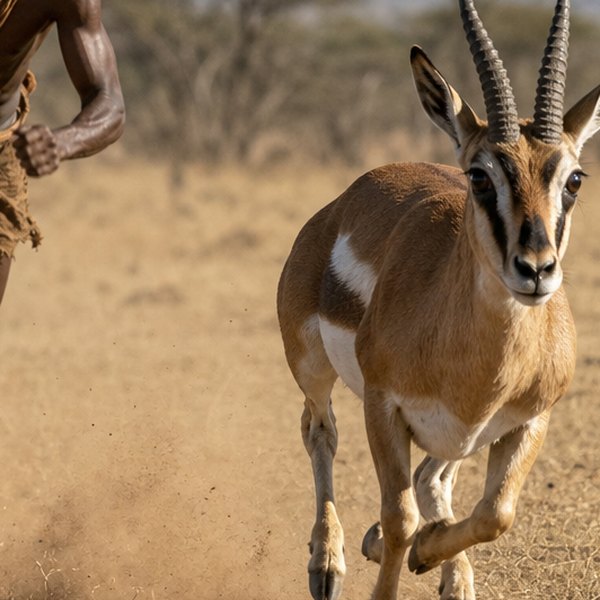
Picture a version of you standing on an African savannah, exhausted, having just chased an antelope for three hours in the midday heat. You've either caught it or you haven't. Either way, your brain needs to sort out very quickly whether that was worth doing. File it under "try again" or "maybe not", and get you motivated to do something equally gruelling tomorrow. That filing system, that little rush of "yes, good, more of that" – that is the same circuitry firing when you peel yourself out of a freezing river in November and feel inexplicably wonderful about it.
The machinery hasn't changed. Only the antelope has.
The Long Run and the Original Deal
Endorphins get all the credit for the runner's high, mostly because they have a satisfying name. But endorphins can't actually cross from the bloodstream into the brain, so they're only part of the story. The more interesting character is endocannabinoid – yes, the same family of molecule your body produces naturally that cannabis mimics. Sustained aerobic effort at moderate intensity, the kind where you're working but could just about hold a conversation, floods your brain with these. The result is that loose, slightly floaty calm you feel around the 40-minute mark of a run. Your ancestors felt this too, though they called it "still chasing the antelope" rather than anything so romantic as a runner's high.
The brain evolved to make long, exhausting, purposeful movement feel good. It had to. If running for hours felt only horrible, we'd have starved.
Making Things With Your Hands
Knitting, woodwork, bread-making, pottery – the reward these give you is chemically distinct from the running flush, and the reason is genuinely fascinating. Repetitive, skilled hand movements combined with a visible, growing result trigger a dopamine release pattern that researchers think mimics the ancient experience of foraging: small, frequent rewards, each one confirming you're on the right track. This is why it's nearly impossible to start a row of knitting and stop halfway through. Your brain treats "finished row" as a small kill. It wants the next one immediately.
There's also a serotonin angle. Finishing something physical and tangible – holding the loaf you made, looking at the shelf you put up – produces a quiet, stable kind of satisfaction that is quite different from excitement. Serotonin is less a party drug and more a "you belong here, you've done well" feeling. That's why craft hobbies have such a loyal following and why people describe them as calming even when they're actually quite fiddly and annoying.
Teams, Tribes and the Oxytocin Problem
Play a team sport for long enough and you'll notice you feel oddly fond of people you'd probably never have chosen as close friends. You've been through something together – even if "something" is a rainy Sunday morning playing five-a-side on a slightly boggy pitch in Hertfordshire. That warmth is oxytocin, which is essentially the brain's bonding compound, usually discussed in the context of hugging or new parents. Turns out shared physical effort produces it too. Your ancient brain cannot reliably tell the difference between "hunted with this person" and "lost 4-2 with this person in the rain", and it bonds you either way.
Cold Water and the Norepinephrine Spike
Cold water swimming is having a cultural moment, and the chemistry behind it is rather blunt. Immersion in cold water triggers a massive norepinephrine release – three to four times your normal resting level – alongside a significant dopamine spike. Norepinephrine is associated with focus, alertness and mood elevation, and the effect lasts for hours after you get out. That's why cold water swimmers tend to describe it less as fun and more as a compulsion. It doesn't feel pleasant going in. The reward is entirely retrospective, which, when you think about it, is almost perfectly designed to mirror the logic of a difficult hunt: the effort is grim, the payoff is chemical, and the memory of the payoff is what gets you back in next time.
Your ancestors would have understood completely.
If this has you wondering what to do with your own evenings, our guide to hobbies to try sorts 40 ideas by cost, time and personality.
Questions this raises
- Why does the brain still react as if we face ancient threats?
- What is the fight-or-flight response actually for?
- Why does modern stress feel physical?
- Can you retrain an evolutionary stress response?