
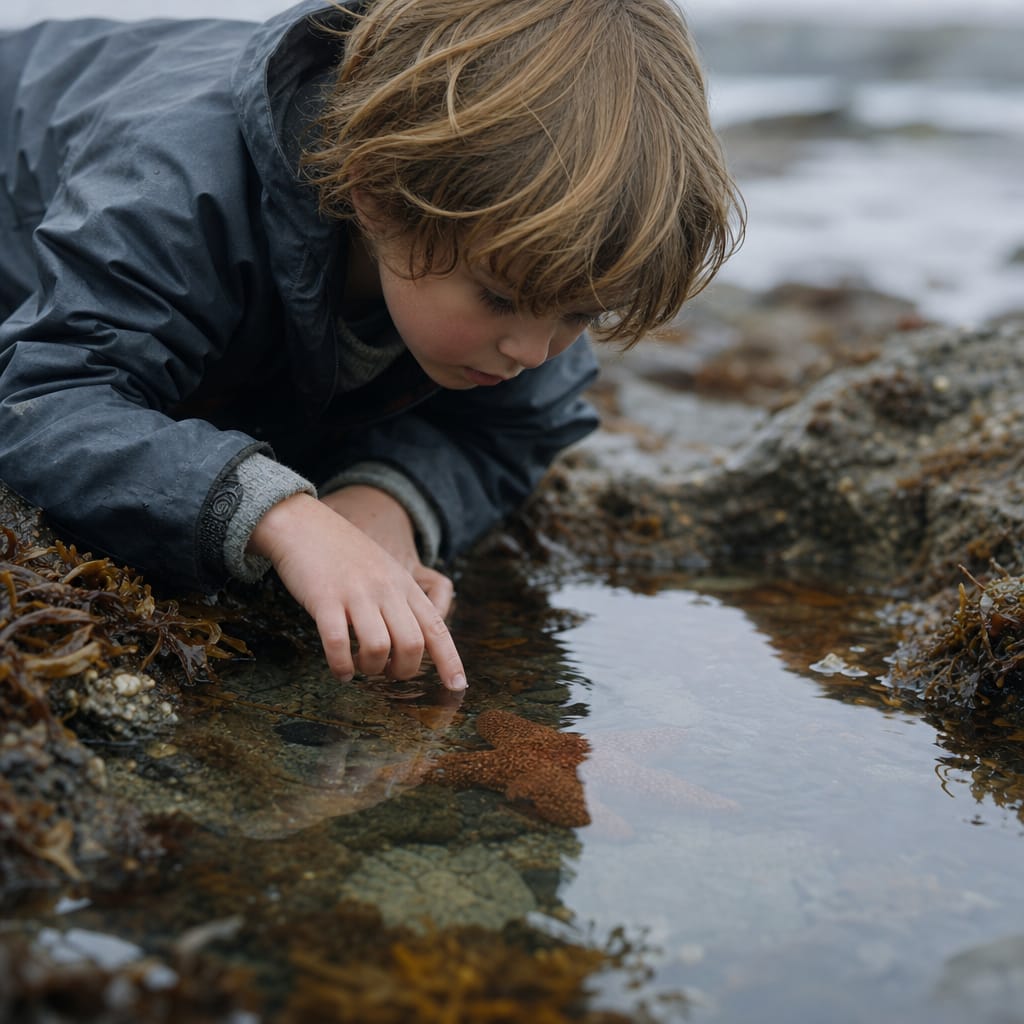
Somewhere around the age of seven, you made a filing decision. You didn't know you were making it. You were just splashing about in a rock pool, or pressing your thumb into a lump of clay, or following some adult through a vegetable garden. But deep in your brain, a quiet and rather officious little department was already at work – stamping things, sorting them, deciding what went in which drawer.
Your Brain’s Reward System
That department is your brain's reward system. Specifically, the dopamine pathways that light up when something feels good and then, crucially, file a note about it for later. Not just "that was nice". Something more like: this texture, this physical sensation, this specific combination of focus and freedom – remember it. And your brain does. For decades.
Which is why it feels so odd, as an adult, to pick up a paintbrush for the first time in twenty years and feel immediately at home. Or to wade into cold water on a grey October morning and feel, inexplicably, fine. You're not discovering a preference. You're recognising something. The archivist has found the matching folder and is holding it up.
Reward Salience
The technical term for this is reward salience – the way your brain assigns a kind of emotional weight to certain experiences based on how your dopamine system responded to them originally. The early ones carry the most weight. The brain is at its most plastic in childhood, its filing system still warm and receptive, still deciding what the world is supposed to feel like. First encounters with movement, with making things, with being outdoors or being still – these don't just leave memories. They leave chemical signatures. Grooves.
A Harder Question Than It Sounds
This is what makes the question "what do I enjoy?" so much more interesting than it sounds. You're not really conducting a search. You're running a recognition test, and the activities that pass it tend to share something with an experience that rewired you before you had the vocabulary to describe it.
Can you develop a genuine new interest as an adult?
Which is also, incidentally, why it's worth being curious about the activities you've never quite got round to trying. The archivist can only file what you bring it. If you spent your whole childhood in a suburb with a screen and a sofa, large chunks of the filing cabinet are simply empty – which means there are preferences sitting undiscovered, not absent. The brain doesn't reject experiences it's never had. It just hasn't been introduced yet. (There's a good deal more on this kind of self-discovery at The Stranger Inside You, if you're curious where the thread goes.)
The odd upshot of all this is that when someone tells you they "found their thing" late in life – took up wild swimming at forty-five, fell into ceramics at fifty-two and couldn't explain why it felt so right – they're probably not being melodramatic. They've just handed the archivist something it recognised. A folder that's been sitting there, unlabelled, waiting for someone to put the right thing in it.
Questions this raises
- Why do childhood interests shape adult hobbies?
- Why do some hobbies never stick?
- How early do our preferences get set?