
Somewhere around 3pm on a Sunday, it arrives. Not sadness, not tiredness, but that low, unplaceable hum of wrongness. You are warm, fed, and perfectly safe. You are also, somehow, completely unbearable to yourself.
You probably blame your personality. Maybe you're not outdoorsy enough, or not creative enough, or you've just watched too much television and broken something in your brain. None of that is true. What you're actually experiencing is your threat-detection system having an absolute meltdown because nothing is trying to eat you.

Why does Sunday afternoon feel uncomfortable?
The bit of your brain that generates this feeling is very, very old. It evolved to scan a savannah, not a sitting room. Its job was to notice when things went quiet – when the birds stopped singing, when the herd shifted, when the air changed – and to generate a crawling discomfort that forced the body to move, check, act, survive. It was brilliant at this for about 200,000 years. Then the predators went away and the same signal had nowhere to go, so it misfires into your Sunday afternoon instead.
This is not a metaphor. The restlessness and the hollow fidgetiness and the sense of low-level dread are the same neurological event as alertness before danger – just with nothing on the other end of it. There's a useful piece on exactly this kind of ancient brain-meets-modern-life collision at Your Brain Is Running Software From 200,000 Years Ago.
What Actually Satisfies It
The interesting bit is what actually satisfies it.
Your brain isn't being unreasonable. It's listening for specific things. Movement through space – am I scanning the territory? A problem with a visible result – did I do anything? Other people nearby and in good spirits – is the group intact, are we safe? Creation of something that wasn't there before – have I contributed to the tribe? These aren't just nice things to do on a weekend. They're the original requirements. Activities that deliver one or more of these work so well precisely because they're speaking the right language.
How can you make Sundays feel better?
Physical activity works – a walk somewhere with an actual horizon, a cycle with turns and decisions in it. Your brain still interprets "moving through a landscape" as "successfully patrolling," and the signal quiets because you've answered it. A jigsaw, a bit of cooking, a drawing, some gardening: all of them give you the closed loop of a task completed with your hands, which is the oldest proof of competence there is. And time spent properly with other people – not scrolling near them, but talking, doing something together – reassures the part of your brain still counting heads around a fire.
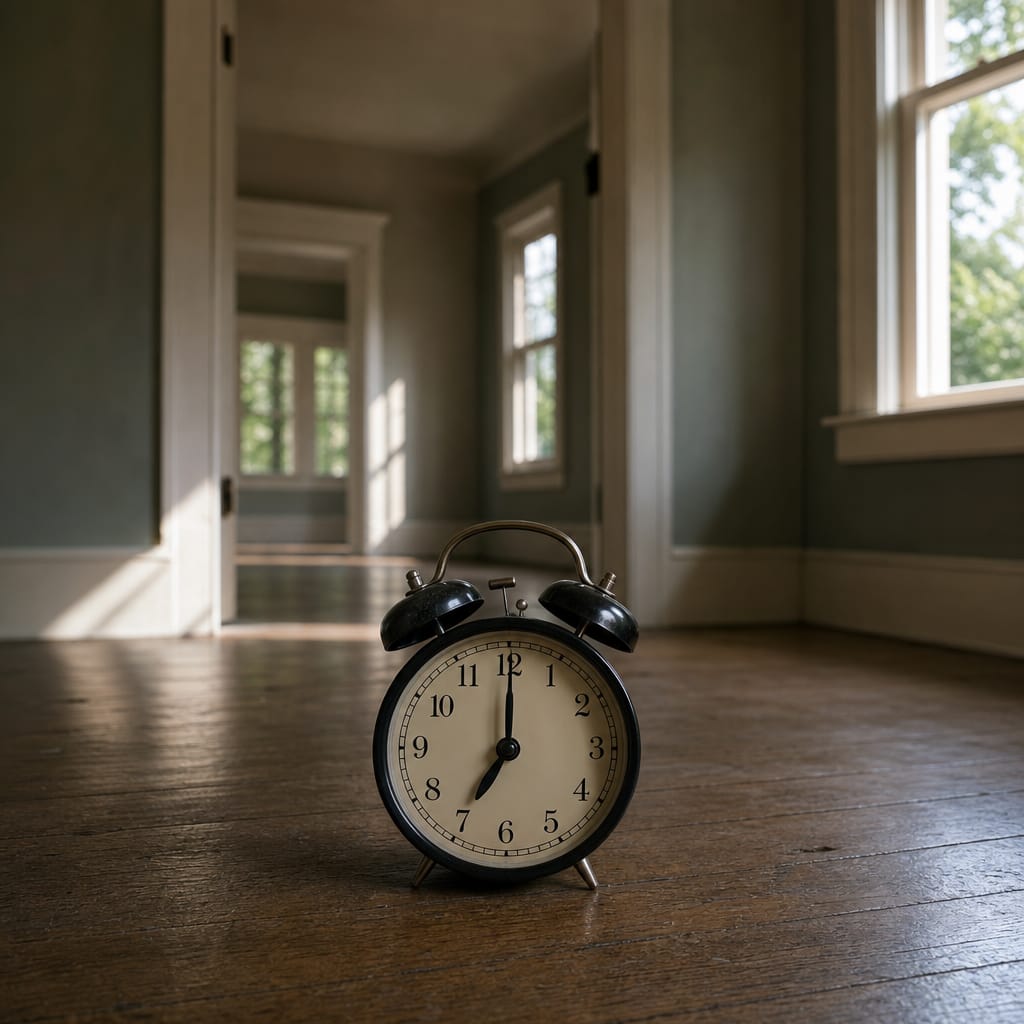
The Sunday feeling isn't a character flaw and it isn't boredom in the ordinary sense. It's an alarm going off in an empty house. The trick is not to silence it with more passive input, more television, more phone. The trick is to give it what it's asking for, which turns out to be the same things humans have always needed, just dressed up differently and considerably warmer.
Questions this raises
- What causes low mood at the end of a weekend?
- Is Sunday dread a real phenomenon?