

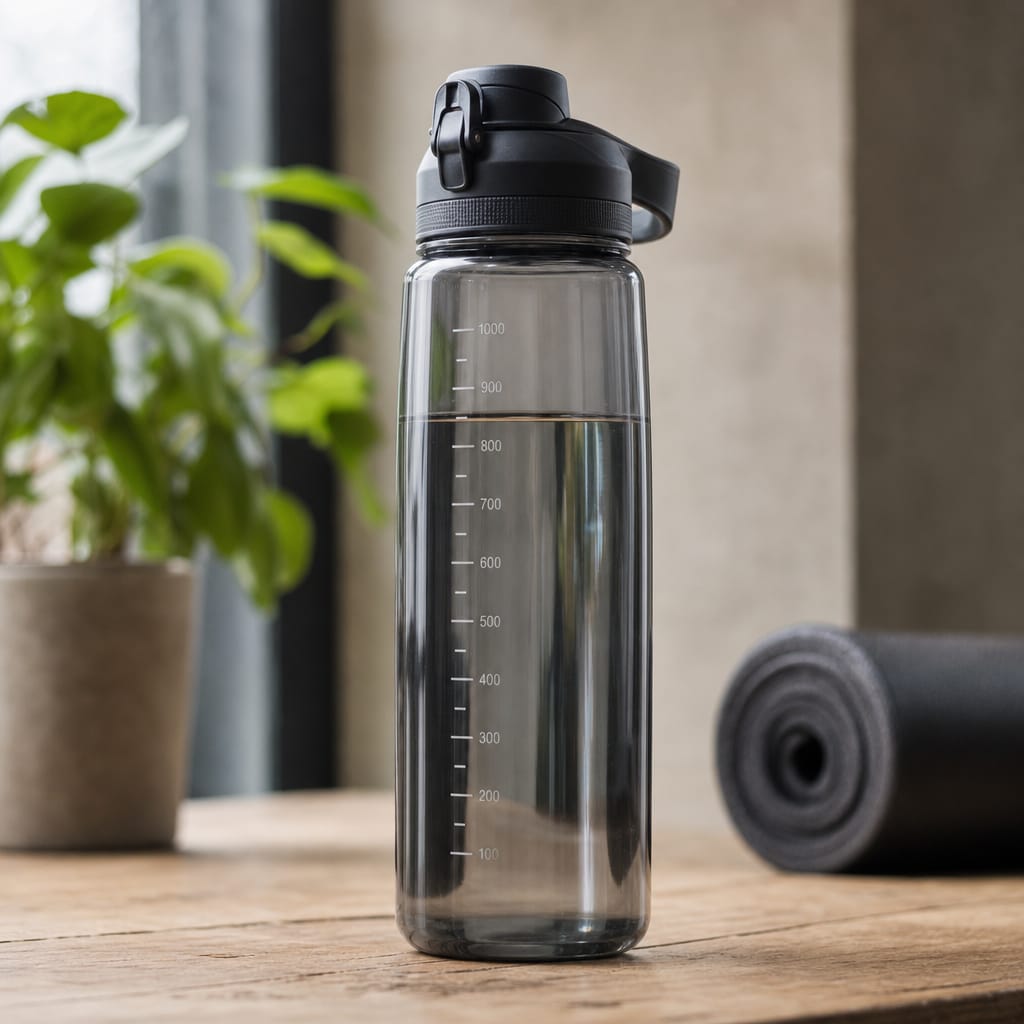
There's a number floating around in the back of most people's heads. Eight. Eight glasses of water a day. You probably feel vaguely guilty when you don't hit it, and you might own a bottle with hourly targets printed down the side.
Where the Number Came From
Here's the thing though: that number didn't come from a doctor or a clinical trial or even a particularly well-informed magazine. It came from a 1945 American government dietary recommendation that said adults need about 2.5 litres of fluid per day – and then immediately added that most of that comes from food. Somewhere in the relay, that footnote got dropped. What arrived at your end of the chain was: drink eight glasses of water or you're doing life wrong.

That's lifestyle advice in a nutshell, really. It sets off from somewhere perfectly reasonable, passes through a dozen pairs of hands, and arrives at you stripped of all context, wearing complete confidence.
The 10,000 Steps Target
Take the 10,000 steps target. This one didn't come from medicine at all. It came from a Japanese marketing campaign run ahead of the 1964 Tokyo Olympics, for a pedometer called the Manpo-kei – which translates, quite literally, as "10,000 steps meter." The number was chosen because the character for 10,000 (万) looks a bit like a person walking. It was a logo, essentially. A bit of branding. And now it is the daily goal of millions of people in NHS apps and on smartwatch dashboards, stated with no caveats whatsoever.
And Work-Life Balance
The work-life balance story is slightly less charming but just as tangled. Henry Ford popularised the eight-hour working day in 1914, partly out of genuine worker welfare and partly because he'd worked out that exhausted people don't buy cars. The "balance" part – the idea that life and work are two things that need deliberate management against each other – came much later. Somewhere in the late 1970s and 1980s, it emerged as a response to a professional culture that was openly swallowing people whole. By the time the phrase reached common speech it had divorced itself entirely from those industrial roots and become a kind of floating moral virtue, something you're supposed to achieve without anyone really agreeing on what it looks like when you have.
This is how most lifestyle wisdom travels: a sensible response to a specific problem, in a specific time and place, slowly amputated from all of that until it becomes a universal instruction. You're not actually following advice. You're following the faint echo of advice, which is a different thing entirely.
For a deeper dig into how information mutates across time, The Longest Game Of Chinese Whispers In The World is worth an afternoon of your life.
None of This Means Stop
None of this means you should throw out your water bottle or stop walking. The 10,000 steps figure turns out to be fairly defensible even if its origins are pure marketing, and staying hydrated is genuinely good for you – the eight-glasses rule is just an odd way of getting there. It's more that the confidence with which these things get passed on is wildly out of proportion to how they started. Somewhere upstream there's always a footnote, a logo, or a Ford shareholder calculation. And by the time it reaches you, it's just The Thing You're Supposed To Do.
Questions this raises
- Where did common health rules come from?
- Why do unfounded health rules persist?
- How should you judge a health claim?
- Is more water always better?