

Black mould in the corner of your bedroom has been painted over twice and has returned both times. Anti-mould paint, a dehumidifier and sealing up the many gaps around the window frames are all solutions that the internet recommends for this problem. None of them are wrong, exactly, but they don't treat the correct patient.
If you live in a Victorian terrace (built between about 1850 and 1914, and there are millions of the type) then what you have got is not a box to keep the weather out. It was a working ventilation system, and it's been switched off somewhere in the last 60 years or so.
The Chimney Stack Had a Second Job
The chimney creates a draw of warm air rising from the room. This pulls up the cooler air entering behind it. In a Victorian terrace, air enters at various lower points of the building such as between the skirting board and the wall, through floor joints and around the edges of the windows. The air then rises up through the house to exit at the top.
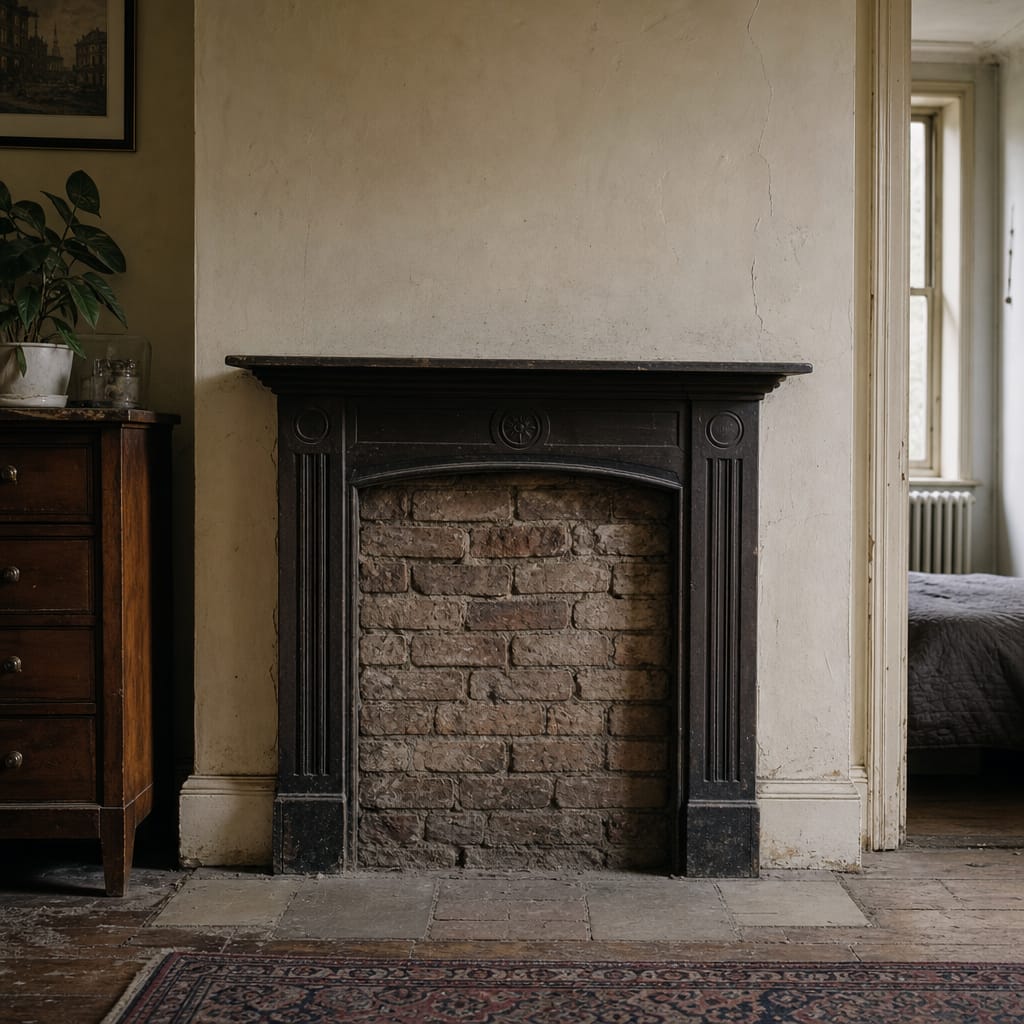
In these houses, every single fireplace, even an unlit one, draws air upwards through the flue. This draw pulls cooler air into the room behind it. Builders of terraces for working class families of the Victorian era knew that cooking, washing and sleeping generated a huge amount of moisture, and designed houses to draw damp air up out of the bottom of the house and exit at the top. The chimney stack was a fundamental part of the house’s structure. It was not a decorative feature. Someone has since sealed it up.
The Walls Had a Job Too
Victorian lime plaster and lime mortar are permeable to moisture in vapour form. They dry from the outside surface and nobody ever finds out that they have been doing so. They move moisture from within a building out to the exterior of the building without it ever condensing as liquid damp.
Cement render and gypsum plaster form vapour barriers. Seal up a Victorian wall with either of these products and you’ve created a dead end for the moisture to arrive at. Combining this with new double glazed windows means that you have also removed the natural ventilation that passed through the original gaps around the windows.
For a thought about how small, unremarkable decisions stack up into something you didn't plan for, Every Time You Do Something, You're Voting is worth ten minutes.
The Mould Knows Exactly Where the System Broke
Moisture in a sealed Victorian house will travel until it reaches the coolest point in the house, usually a corner, a north-facing wall or the reveal around a window. The mould grows from the moisture and appears in the exact spot where the original moisture management system has failed to reach.
Anti-mould paint stops mould growth on surfaces where it occurs, but does not prevent moisture from arriving at that same area.
A building altered in this way gives the most specific feedback possible regarding where the original structure was altered. The feedback is not that the house is sick, just that there has been a change in that exact spot.
—
Can I just unblock the fireplace and call it done?
Not safely, no. A blocked flue often contains debris and, fairly commonly, nesting material from birds – so before you light anything, the flue needs a liner inspection from a HETAS-registered sweep. That's how chimney fires start.
If the lime plaster is already gone, what's actually worth doing?
This is harder to fix internally without replastering in lime, but the exterior is more critical. Cement render to the exterior of the structure is what actually causes problems by trapping moisture within the walls. Returning the exterior to lime render makes a measurable difference to the behaviour of the walls. Internal surfaces can be covered with a breathable masonry paint as a cost-effective and better alternative to conventional vinyl emulsion paint, but this is a workaround rather than a solution.
Do the walls need to feel damp to the touch to have a problem?
This does not mean the wall is dry. A wall can hold a lot of moisture within the build-up and still feel dry to the touch, especially if painted. Persistent cold patches, a faint tide mark at skirting level, or efflorescence (white crystalline patches) on brickwork are all indicative of moisture moving within the wall and leaving behind a trail of minerals.
My house is 1930s, not Victorian – does this still apply?
Some of this still applies to houses from the 1930s. By then houses were using harder materials than in previous centuries and were soon to abandon the use of lime in construction, so the breathable wall logic applies less. However, many 1930s semis have since had their original chimneys blanked off, cement rendered and draughtproofed without providing any alternative ventilation. Even if your house was designed with less than perfect moisture management in mind, the physics still applies if all three happened to yours.
FAQ
Can I just unblock a Victorian fireplace and start using it?
No, not safely. A blocked flue can contain all sorts of debris and be inhabited by birds who can build their nests in the flue. This can lead to a chimney fire. Therefore, before you light anything, the flue needs to be inspected by a HETAS-registered sweep for damage to the liner. Simply unblocking the fireplace is not enough to make it safe to use.
Why does mould keep coming back in my Victorian terrace after I paint over it?
Anti-mould paint stops the mould growing on the surface but doesn’t stop moisture entering the property. The sealed chimney, cement render, gypsum plaster and double glazing have removed the house’s original moisture management. Therefore the moisture travels to the coolest spot, which is often a corner of a room, a north-facing wall or a window reveal, and the mould returns to the same spot where it was previously.
How can I tell if my walls have a moisture problem if they feel dry?
A painted wall can contain a lot of moisture whilst feeling dry to the touch. Look for cold patches that remain for long periods. A faint tide mark at skirting level could also indicate problems. Efflorescence is another sign of moisture movement within the walls. It appears as white crystalline patches on brickwork.
What can I do if the original lime plaster has already gone?
First tackle the outside of the wall. Cement render is a trap for moisture within walls, and returning the exterior to lime render will make a measurable difference. But indoor replastering with lime is a harder task. In the meantime, switch from vinyl emulsion paint to a better, breathable masonry paint – it’s a workaround, but a cost-effective one.